
Dispatch #5: The Mood That Built No Rest for the Wicked
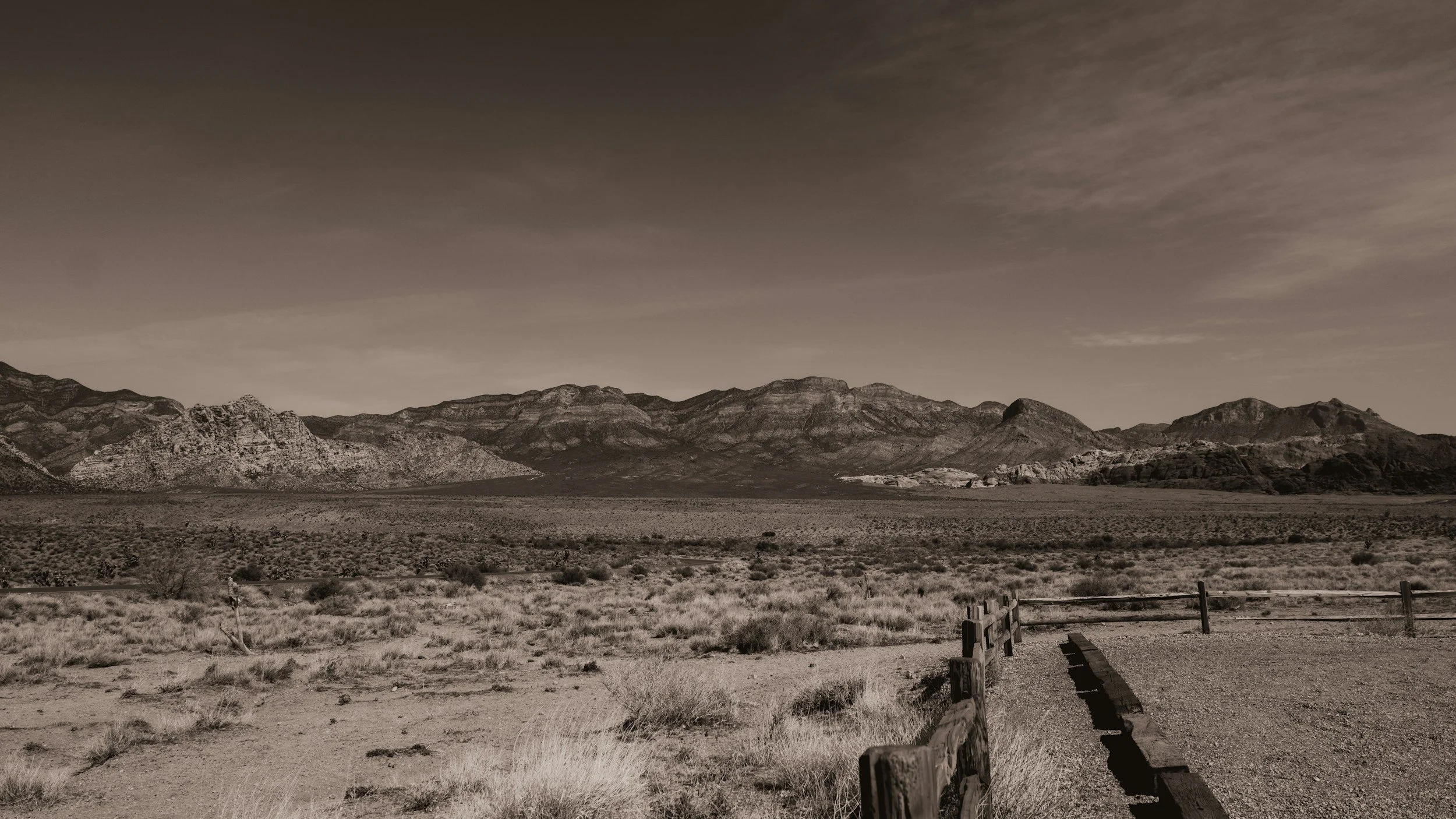
How atmosphere, loneliness, and the Southwest shaped the world of Max West
Before I knew the plot of No Rest for the Wicked — before the Davenports, before the relic, before any of it had a clear shape — I had a sense of who Max West was. Or at least, the mood of him.
Broody, but not miserable.
Charming, but not necessarily on purpose.
Smart enough to see the bigger picture, but still a little naive about how people actually operate.
Noir with humor — even if the joke usually falls on him.
That tone hit me long before the story did. It wasn’t some dramatic creative epiphany. It was more like a familiar heaviness, a kind of quiet I’ve known most of my life.
I’ve spent a lot of time feeling alone, in different ways and in different places. Sometimes that loneliness was uncomfortable, like growing up and never quite fitting in. Other times it felt grounding, like standing outside in northern Greenland during the dark season, smoking and thinking about how small I was under a sky that didn’t seem to end. I felt it during deployments too — nights in Afghanistan, Iraq, and parts of Africa where the world stretched out so far it made you aware of yourself in a way nothing else does.
Las Vegas hits the same way — somehow both vast and isolating. The neon against the desert backdrop, the heat radiating off the pavement at midnight, the mountains watching from a distance. It’s a city packed with people and noise, but you can feel profoundly alone standing in the middle of it.
That’s the mood that shaped Max. And that’s the mood that shaped the book.
The Desert Isn’t Empty
People talk about the desert like it’s empty, but that’s never been my experience. The landscape looks stripped down and simple at first glance, but the more time you spend in it, the more you realize it’s holding far more than it reveals.
If anything, the desert is crowded with what came before.
Generations of Native American tribes made this place home long before anyone else. Then came the pioneers trying to tame it, the Wild West outlaws staking their futures on it, the mobsters and entertainers who built modern Vegas on ambition and risk, and of course the government — testing, burying, and hiding things out here because the land offers cover most people will never understand.
So yes, it looks stark. But it’s not empty.
It’s quiet, but not lifeless.
Still, but full of memory.
That layered feeling is exactly the kind of atmosphere I’m drawn to when I write.
The Real Vegas Lives in the In-Between
Most people think they know Las Vegas because they’ve seen the Strip once or twice, but that version is basically a theme park — loud, bright, and curated for distraction. Locals avoid it unless there’s a strong reason not to.
The real Vegas has its own pulse.
After midnight, especially, the city feels suspended — not awake, not asleep, just existing in this strange in-between. The Strip looks almost unreal from a distance, glowing in the middle of the desert like a mirage. It’s pretty, sure, but in the same way fire is pretty: best admired from afar.
Away from the tourist chaos, the neighborhoods settle into a quieter life. People coming home from night shifts, people leaving for them, people just… wandering. Vegas lets people wander without questions. Everyone has a story, and most aren’t the kind they tell openly.
That contrast — the glow and the silence, the illusion and what’s underneath — fits naturally into Max West’s world. It creates a tension that isn’t loud or theatrical. It just hums beneath the surface, waiting for someone observant enough to notice.
Max is that someone.
The Eerie Side of Being Alone
There’s a specific feeling you get in places that are too big and too quiet — the kind of quiet that sinks into you. I felt it in Greenland during the dark season, standing outside looking up into an infinite sky. I felt it on deployments, under horizons that stretched farther than they should’ve, the air heavier than it had any right to be.
It’s not fear.
It’s awareness.
A sense that the world is bigger than you remembered, and that you’re not the only thing moving around in it. Something else is out there — maybe ancient, maybe indifferent, maybe watching, but not in a horror-movie way. More in a way that reminds you how temporary you are compared to the land around you.
The Nevada desert taps into that same sensation. You can feel alone out there, but also like the land has been here long enough to notice you back. It’s eerie and comforting at the same time — a strange mix that shouldn’t make sense but does.
That’s the foundation of the paranormal in No Rest for the Wicked.
Not showy magic. Not theatrics.
Just the grounded, unsettling truth that the world has layers most people overlook.
The Aesthetic Came First
I’ve always been the kind of writer who sees scenes before I understand how they connect. It might come from my love of classic mysteries, old noir, and the kind of atmospheric stories that start with a moment rather than a manifesto.
That’s how No Rest for the Wicked arrived — in snapshots that didn’t make sense yet, but felt like they belonged together:
Max under a buzzing neon sign that has seen better days
A desert highway so empty it feels like it’s waiting for something
A mansion carrying more silence than any normal home should
A diner at 2 a.m. with bad coffee and surprisingly good conversations
Mountains sitting in the background like they’re judging all of us
These moments weren’t planned. They’re just the kinds of scenes I’m drawn to — gritty, mysterious, grounded in mood rather than spectacle.
That’s the aesthetic that shaped this story.
What This Series Means to Me
Every writer starts somewhere different. I started with a feeling — that space between what we can explain and what we can’t, where things shouldn’t happen but sometimes do anyway.
That’s the space Max West lives in.
Not jump scares. Not theatrics. Just the quieter, more unsettling kind of oddities that feel almost plausible if you’re honest with yourself.
And maybe that’s why this series matters so much to me.
It pulls together pieces of my life — the loneliness, the places that made me feel both small and anchored, the strange nights that made the world feel bigger, the stories I grew up loving, and the ones I wished existed but didn’t.
This book came from all of that.
From mood, from memory, from the odd in-betweens.
I didn’t plan for it to become a series, but once I started writing, it was obvious that Max’s world had more to say.
And honestly? I can’t wait to share it.
